The last year alone has shown just how much Los Angeles winters have changed. For homeowners and property managers searching for exterior painting Los Angeles solutions that hold up through winter rain, the coating system itself matters as much as the craftsmanship behind it.
Weather patterns have changed, moisture behaves differently, and surfaces across the region face new forms of seasonal stress. Our service focuses on delivering a higher caliber exterior coating designed specifically for these evolving conditions.
Winter Weather in Los Angeles Is No Longer Predictable
Los Angeles winters now bring sharper contrasts than many property owners expect. Dry stretches can be followed by sudden storms, and mild temperatures often hide moisture problems until damage is already underway. Exterior surfaces must be prepared and coated to respond to these shifts, not resist them rigidly.
Traditional paints were formulated for slower, steadier weather cycles. Today’s environment demands coatings that flex, breathe, and seal at the same time.
Our approach to exterior painting Los Angeles properties starts with acknowledging that winter exposure is no longer light or occasional. For more information on how you can best prepare for rain in LA, follow this link to “Ready LA County.”
The Atmospheric River Threat and Trapped Moisture
Recent winters have included a shift toward intense, concentrated rain events, often driven by atmospheric river systems. In 2025 and now 2026, these storms became more frequent and more aggressive, delivering heavy rainfall over short periods rather than gentle, extended showers. When this happens, standard exterior paints often fail in specific ways:
- Water seeping behind rigid paint films
- Rapid saturation of stucco and masonry
- Trapped moisture expanding as temperatures fluctuate
- Paint bubbling or blistering as pressure builds beneath the surface
Once bubbling begins, the coating has already lost its protective seal. Peeling, cracking, and premature repainting often follow.
Our service uses advanced exterior coatings designed to handle moisture intrusion without trapping it. Instead of forming a brittle shell, the coating adapts to the wall beneath it, maintaining adhesion even when rain arrives suddenly and intensely.
This is one of the most critical differences homeowners notice when comparing exterior painting Los Angeles options after a severe winter season.
How Our Coating System Responds to Moisture Pressure
The walls of a home are never truly dry during winter. Even without visible rain, moisture moves through stucco, masonry, and concrete surfaces.
Between storms, evaporation occurs. During storms, saturation happens quickly. The coating must handle both without failure. Our exterior system is engineered to:
- Resist water penetration from driving rain
- Allow internal moisture vapor to escape
- Maintain adhesion during rapid wet-to-dry cycles
- Prevent pressure buildup beneath the paint film
Stucco “Breathing” and the Need for Elastic Protection
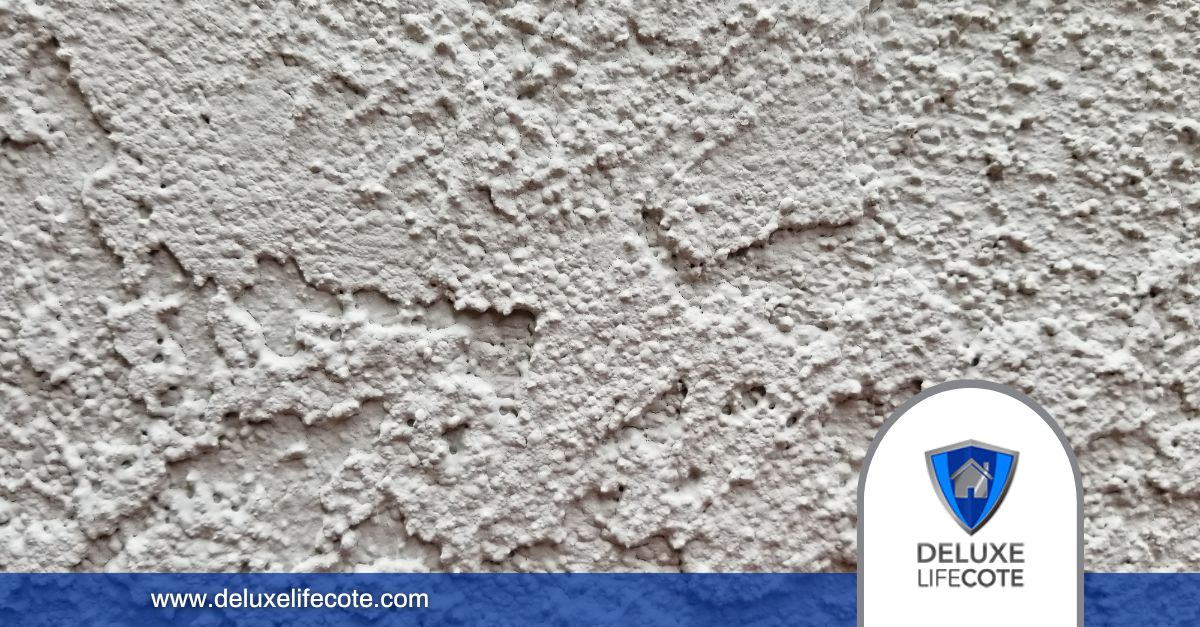
Stucco remains one of the most common exterior finishes throughout Los Angeles. It performs well in mild climates, but it has a specific behavior that must be respected.
Stucco expands when it absorbs moisture and shrinks as it dries. During winter, this cycle can repeat multiple times in a single week.
If the coating applied over stucco is too rigid, stress concentrates at the surface. This leads to:
- Hairline cracking
- Water intrusion through microfractures
- Accelerated deterioration beneath the paint
Our durable coating functions as an elastic skin over stucco surfaces. Its elastomeric properties allow it to stretch and contract with the wall beneath, rather than fighting against it.
This flexibility is a defining factor in the exterior painting of Los Angeles homes that remain intact after repeated wet-dry cycles.
Why Elastic Coatings Perform Better on L.A. Homes
A flexible exterior coating does more than prevent cracks. It preserves the entire wall system. Advantages include:
- Reduced stress on stucco during saturation
- Improved resistance to surface fissures
- Longer coating lifespan without peeling
- Improved visual consistency across large wall areas
By matching the natural movement of the structure, the coating maintains both protection and appearance throughout the season.
The Marine Layer Factor and Winter Humidity
Winter in Los Angeles brings more than rain. Coastal and Westside areas experience extended periods of marine layer humidity, often similar to “May Gray” conditions but occurring in December and January.
This constant moisture exposure creates a unique challenge.
Walls may appear dry while remaining saturated with airborne moisture. Over time, salts within masonry migrate to the surface, leaving behind white, chalky streaks known as efflorescence.
Lower-quality latex paints struggle here and their failures often include:
- Discoloration beneath the surface
- Powdery residue bleeding through the coating
- Uneven sheen caused by moisture absorption
Our coating system handles efflorescence more effectively by managing moisture movement rather than sealing it in. This allows salts to dissipate without staining the finished surface.
For homeowners evaluating exterior painting Los Angeles solutions near the coast, this performance difference becomes visible within a single season.
Preventing Efflorescence Without Sacrificing Durability
Efflorescence is not just cosmetic. It signals moisture movement within the wall. Our preparation and coating process addresses this by:
- Cleaning and stabilizing affected surfaces
- Using coatings designed to resist salt migration
- Allowing controlled vapor transmission
- Maintaining a uniform, long-lasting finish
This approach protects the structure while preserving the exterior appearance through humid winter conditions.
Energy Efficiency and Thermal Stability in Winter
While winter temperatures in Los Angeles are moderate, moisture and wind still affect thermal performance. Exterior coatings contribute more to comfort than many homeowners realize.
Our system includes energy efficient paint technology designed to reflect radiant heat while maintaining insulation support. This helps stabilize interior temperatures even during damp, overcast winter days. Benefits include:
- Reduced thermal transfer through exterior walls
- Improved comfort during temperature swings
- Added protection for underlying building materials
This added layer of performance complements the structural benefits of a properly applied exterior coating.
How We Prepare Homes for Winter Exposure
Performance begins long before the coating is applied. Preparation is where durability is earned.
Our service includes a detailed evaluation of each surface to identify vulnerabilities before winter weather exposes them. Preparation often includes:
- Surface cleaning to remove contaminants and salts
- Repair of compromised stucco or masonry
- Moisture assessment in high-risk areas
- Application methods tailored to surface conditions
This process ensures the coating performs as intended under real-world winter stress.
Long-Term Protection Backed by Real Confidence
A coating system designed for winter conditions should not come with uncertainty. That is why our exterior painting process is supported by a lifetime guarantee.
This commitment reflects the confidence we have in both our materials and our application methods.
Clients often tell us that the difference becomes apparent after the first heavy rain season. Their walls remain intact, finishes stay consistent, and maintenance concerns diminish significantly.
Many of our reviews highlight this long-term reliability as the deciding factor in choosing our team for exterior painting in Los Angeles.
Exterior Protection That Matches Los Angeles Winters
Los Angeles winters may never look dramatic on a forecast, but the effects on exterior surfaces are real and cumulative. Rain arrives faster, humidity lingers longer, and walls respond accordingly.
Los Angeles exterior painting today requires coatings that adapt rather than resist. Through advanced materials, careful preparation, and application techniques refined for regional conditions, we help protect homes against winter rain, marine layer moisture, and long-term surface stress.