
Strong afternoon winds, fine dust carried from inland areas, and dramatic temperature swings between day and night all work against your home’s exterior. At Deluxe Lifecote, we engineered our exterior coating paint to address these exact conditions and others.
Southern California homes face environmental stresses that are easy to overlook because they happen slowly, season after season. Over time, these forces compromise ordinary finishes and expose walls to moisture and structural wear.
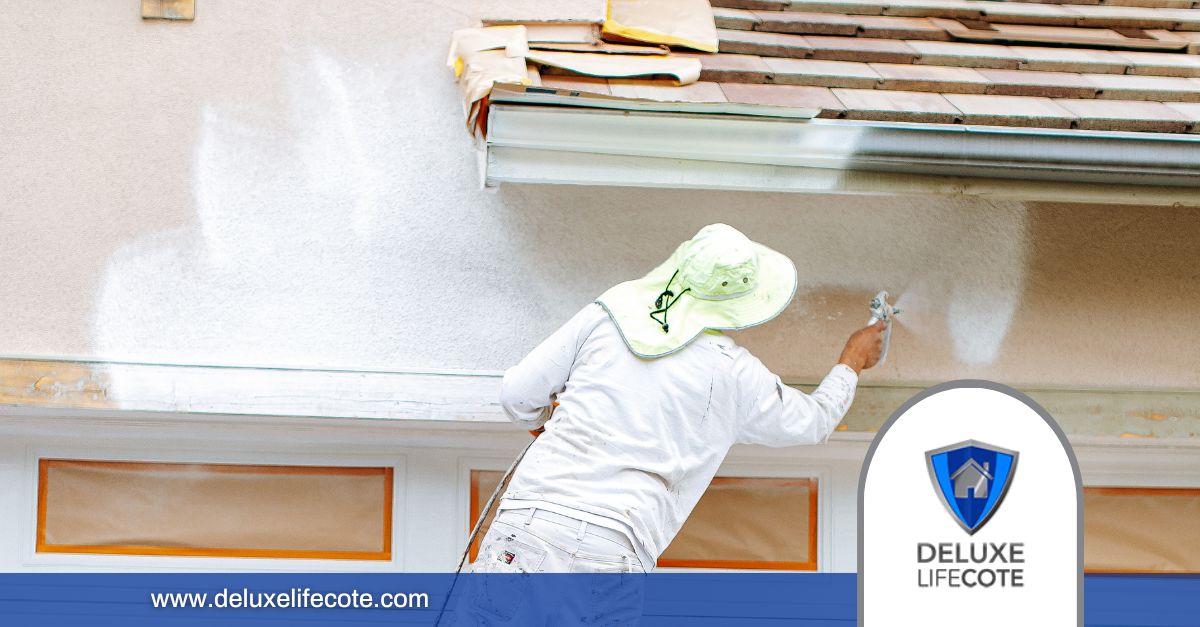
Environmental Forces That Work Against Exterior Surfaces
Homes throughout coastal and inland Southern California experience a unique mix of weather patterns. Bright sun can heat exterior walls intensely during the day, while evening temperatures drop quickly once the sun sets. Add seasonal winds and airborne debris, and exterior walls are constantly under stress.
Standard exterior finishes are rarely designed with this combination in mind. They may look intact for a few years, but beneath the surface, tiny failures begin to form. These small issues often go unnoticed until they develop into visible cracking, discoloration, or moisture intrusion.
Our approach focuses on minimizing these threats before they can compromise the structure itself.
Thermal Shock and Its Impact on Exterior Walls
Thermal shock is one of the most damaging and least understood forces affecting exterior finishes. It occurs when a surface experiences rapid temperature changes that exceed the material’s ability to expand and contract safely. You can learn more about thermal shock here.
In many Southern California neighborhoods, a wall can be warmed significantly by afternoon sun and then cool rapidly after sunset. That repeated cycle places stress on rigid coatings that lack flexibility.
How Rapid Temperature Shifts Create Micro-Cracking
Traditional exterior paint hardens as it cures. While this rigidity can provide an initially smooth appearance, it also limits the coating’s ability to move with the underlying material. As walls expand in heat and contract in cooler air, stress builds.
That stress often releases itself in the form of microscopic cracking. These fine fractures may resemble a spider-web pattern and are often invisible from a distance. Over time, however, they widen and connect, allowing moisture to penetrate behind the surface.
How Our Coating Absorbs Thermal Stress
Our exterior coating paint is elastomeric by design. Rather than resisting movement, it accommodates it. With an elongation rate of up to 400 percent, the coating stretches and relaxes along with the substrate beneath it.
This flexibility allows the surface to handle dramatic temperature swings without fracturing. Instead of cracking under pressure, the coating acts as a buffer, absorbing stress that would otherwise damage the wall.
By minimizing thermal shock damage, we help preserve the integrity of the exterior envelope over the long term.
Wind as a Constant Abrasive Force
Wind is often thought of as a temporary inconvenience, but its long-term effect on exterior surfaces is significant. In many areas, (like Los Angeles, Irvine, and elsewhere throughout SoCal) wind carries fine dust, sand, and debris that repeatedly strike exterior walls. Over years, this constant contact behaves like low-grade abrasion.
The Gradual Erosion of Thin Paint Layers
Standard paint is usually applied in relatively thin coats. While this may be sufficient for color coverage, it offers limited resistance to airborne particles. Each gust of wind carrying debris removes a microscopic amount of material from the surface.
Over time, this erosion becomes visible. Paint thins, textures flatten, and protective layers wear away. Eventually, underlying materials such as stucco or wood become exposed, increasing the risk of moisture damage.
Thickness as a Protective Advantage
Our exterior coating paint is applied at up to twenty times the thickness of conventional paint systems. This substantial build transforms the coating into a true protective layer rather than a cosmetic finish.
Instead of wearing away quickly, the coating absorbs the kinetic energy of wind-driven particles. The thickness allows it to take repeated impacts without chipping or thinning in a way that compromises performance.
This added mass is a key reason our system performs reliably in windy conditions common throughout the region.
Dust, Grime, and Surface Contamination
Dust does more than dull the appearance of a home. It embeds itself into porous surfaces, creating discoloration that is difficult to remove without aggressive cleaning.
In many cases, homeowners resort to frequent pressure washing, which can further degrade standard paint.
Why Ordinary Paint Holds Onto Dirt
Traditional exterior paint has a porous structure at a microscopic level. Dust particles settle into these tiny openings and become trapped. Over time, layers of grime build up, giving the home a dingy, aged look.
This issue is especially noticeable on lighter-colored surfaces and in areas exposed to frequent wind or nearby construction.
Creating a Smoother, Cleaner Surface
Our exterior coating paint incorporates ceramic microspheres that create a denser, smoother finish. This structure reduces surface porosity, making it more difficult for dust and dirt to adhere.
When rain falls or the surface is rinsed with water, debris is more likely to wash away rather than embed itself. This helps the home maintain a cleaner appearance with less ongoing effort. The result is an exterior that looks well-maintained without constant intervention.
Preserving the Exterior Envelope Against Moisture
Cracks and erosion do more than affect appearance. They compromise the exterior envelope, which is the barrier that keeps moisture out of the wall system.
Once that barrier is breached, wind-driven rain can enter the structure, particularly during winter storms.
The Link Between Surface Damage and Interior Problems
Even small cracks can allow water to migrate behind exterior finishes. When driven by wind, rain can penetrate deeper than many homeowners realize. Over time, this moisture can lead to wood rot, compromised insulation, and interior mold growth. These issues often remain hidden until repairs become extensive and costly.
Maintaining a Continuous Seal
By minimizing cracking from thermal movement and reducing erosion from wind, our exterior coating paint helps maintain a continuous, watertight seal. This protection plays a critical role in preserving interior air quality and structural stability.
Sealing the exterior envelope is one of the most effective ways to prevent moisture-related problems before they start.
Regional Performance Across Southern California
Environmental conditions vary across the region, but the underlying threats remain consistent. Homes in coastal areas, foothill communities, and inland neighborhoods all face some combination of sun exposure, wind, and airborne debris.
Our system is designed to perform across this range, serving homeowners throughout Southern California, including markets influenced by San Diego climate patterns and those in LA, Irvine, and elsewhere.
Rather than tailoring a coating to a single microclimate, we developed a solution capable of handling diverse conditions without sacrificing performance.
Long-Term Durability and Confidence
One of the most important aspects of any exterior upgrade is how it performs over time. Frequent maintenance not only adds expense but also creates uncertainty for homeowners.
Our exterior coating paint is backed by a lifetime guarantee, reflecting confidence in its ability to resist cracking, peeling, and erosion under normal environmental conditions.
This assurance allows homeowners to invest once rather than repeatedly addressing the same exterior issues.
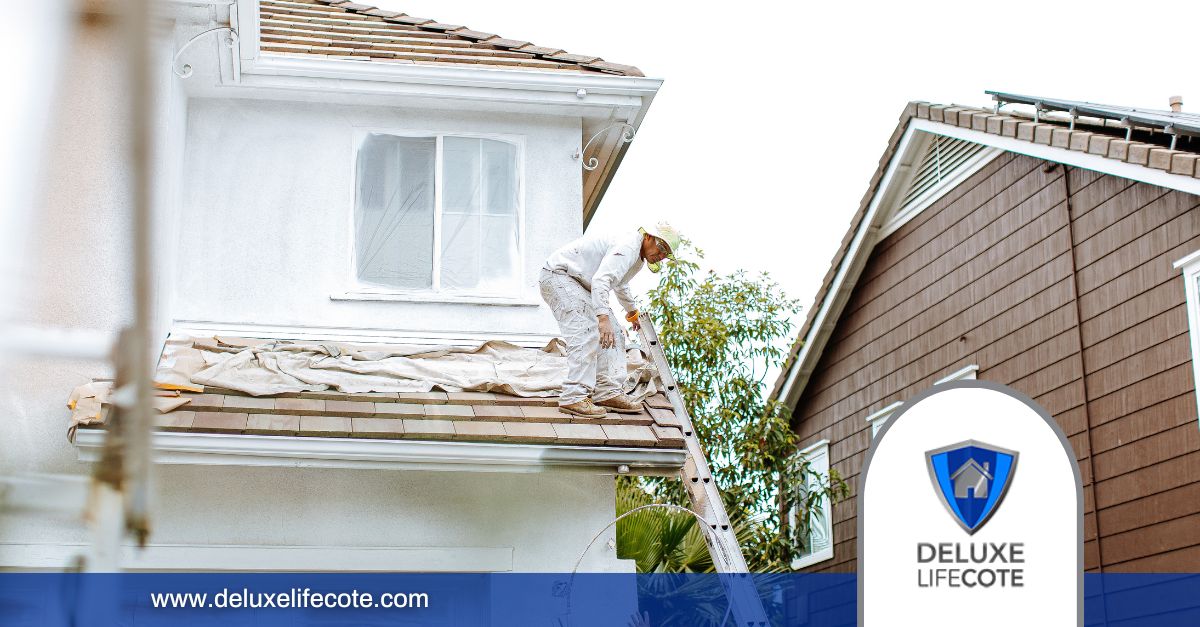
How Our Approach Supports Homeowners
Our service is focused exclusively on applying a high-performance exterior coating system designed to protect homes against environmental stress. We do not offer temporary paint solutions or short-term cosmetic fixes.
We help homeowners by:
- Reducing damage caused by thermal shock
- Minimizing surface wear from wind-driven debris
- Creating a cleaner, more resilient exterior surface
- Preserving the exterior envelope against moisture intrusion
Every aspect of our process is aligned with long-term performance rather than quick visual improvement.
Rethinking Exterior Protection
Exterior finishes are often treated as decorative elements, but in reality, they serve as the first line of defense against environmental forces. Choosing the right exterior coating paint means addressing not only color and texture, but also flexibility, thickness, and surface chemistry.
By accounting for wind, dust, and thermal stress, we help homeowners protect their properties in a way that standard paint systems simply cannot match.
In a region where environmental wear is constant, investing in a coating engineered for these conditions provides lasting protection and peace of mind.