

What makes an Orange County energy-efficient exterior coating?
An Orange County energy-efficient exterior coating uses inorganic infrared-reflective ceramic pigments and a high-build elastomeric polymer membrane (20+ mils dry film thickness) to reflect solar radiation rather than absorb it into exterior stucco. By lowering exterior wall surface temperatures by 20°F to 40°F during peak Southern California sun, these coatings reduce conductive heat transfer into living spaces, cut summer air conditioning loads, and resist coastal salt-air degradation for decades without repainting.
For homeowners across Southern California, protecting a residential exterior requires far more than cosmetic color refreshes. Selecting an Orange County energy-efficient exterior coating addresses two compounding financial pressures: escalating utility rates during peak summer cooling seasons and rapid exterior paint degradation caused by extreme local microclimates.
Traditional acrylic latex paints act as passive sponges for solar radiation while offering minimal physical defense against moisture, ultraviolet radiation, and structural stucco movement. Engineered architectural coatings replace fragile paint films with an integrated thermal and weatherproofing envelope tailored to Orange County’s distinct coastal and inland environments.
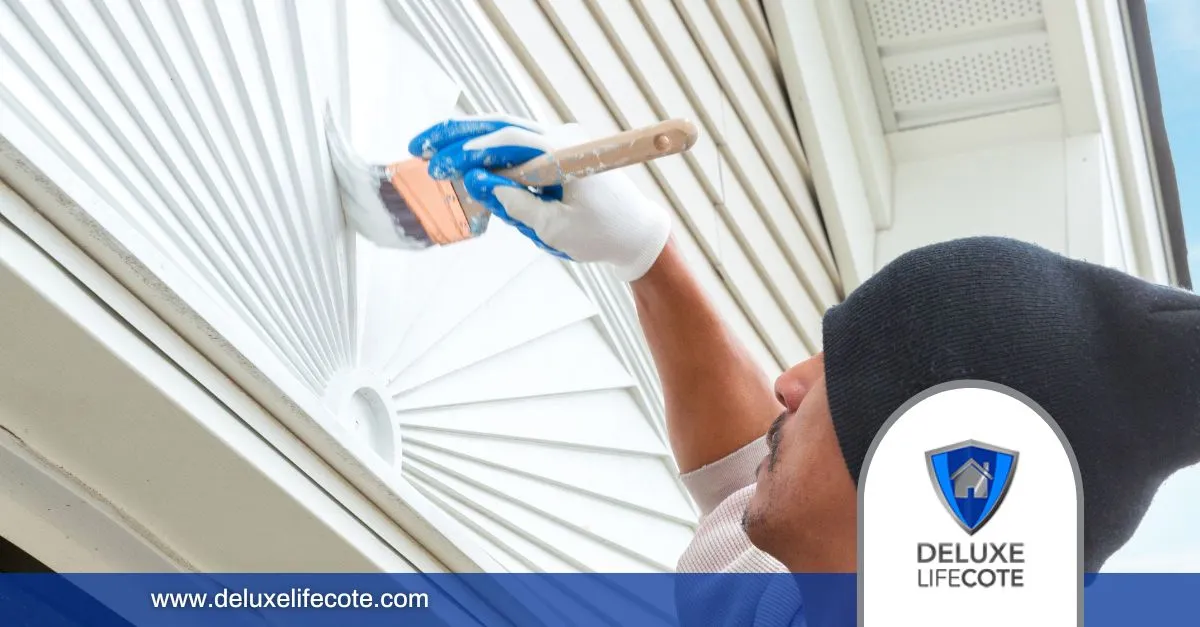
Engineering for Orange County’s Dual Microclimates: Inland Heat vs. Coastal Salt Air
Orange County’s geography compresses two radically different climate zones into a narrow twenty-mile corridor between the Santa Ana Mountains and the Pacific Ocean. Homes located in inland foothill and valley communities—such as Yorba Linda, Anaheim Hills, Villa Park, and North Tustin—experience intense daytime solar irradiance, dry Santa Ana wind events, and summer temperatures routinely climbing into the 90s and low 100s.
Meanwhile, properties situated along the coastal shelf in Newport Beach, Laguna Beach, Dana Point, and Huntington Beach face persistent marine layers, salt-laden onshore breezes, high relative humidity, and intense UV reflection off the ocean.
Conventional exterior acrylic latex paint is engineered to dry into a rigid film measuring roughly 1.5 to 2 mils thick (about the thickness of a standard sheet of printer paper). Under inland heat, dark and mid-tone conventional paints absorb up to 90% of incoming solar radiation. Dense Southern California three-coat stucco and concrete block walls absorb that thermal energy all afternoon, turning the home’s exterior shell into a massive thermal battery.
Even after the sun drops behind the Saddleback ridgeline, stored heat continues radiating inward through wall cavities until midnight, forcing HVAC systems to run long into the evening.
Along the coastline, standard paint fails through chemical and mechanical breakdown. Microscopic sodium chloride aerosols settle onto exterior walls during nightly marine fog cycles, drawing moisture into microscopic pores in thin paint films.
When morning sunlight hits the damp surface, rapid evaporation creates vapor pressure behind the paint, leading to premature blistering, peeling, and binder oxidation (chalking) within three to five years.
Deluxe Lifecote solves both regional failure modes through a multi-layer, high-build architectural system applied up to 20 times thicker than conventional house paint.
Rather than relying on fragile organic binders, this permanent protective barrier fuses tightly to stucco, wood, brick, and fiber cement substrates, locking out corrosive salt air while blocking solar heat gain at the exterior surface.
Homeowners looking to eliminate the five-to-seven-year repaint cycle can explore Deluxe Lifecote’s specialized lifetime exterior wall coatings designed specifically for Southern California residential architecture.
Total Solar Reflectance (TSR) and Lowering Peak Summer HVAC Cooling Loads
Understanding how an exterior wall manages sunlight requires looking beyond visible color brightness. Sunlight reaches a home across three distinct bands of the electromagnetic spectrum:
- Ultraviolet (UV) Light (~5% of solar energy): Invisible high-energy rays responsible for breaking down chemical bonds in standard paint resins and fading pigments.
- Visible Light (~43% of solar energy): The wavelengths perceived by the human eye as color. Lighter colors reflect more visible light, while darker colors absorb it.
- Near-Infrared (NIR) Radiation (~52% of solar energy): Invisible wavelengths that carry the majority of solar heat. Standard dark and medium-toned paints absorb almost all NIR energy, transferring heat directly into the building structure.
High-performance thermal coatings rely on Total Solar Reflectance (TSR)—a measurement of the total percentage of solar energy (UV, visible, and near-infrared combined) reflected away from a surface. According to building science guidelines published by the EPA, cool exterior surfaces utilizing specialized reflective pigments significantly reduce heat absorption and lower cooling energy demand in sun-drenched climates.
How an Orange County Energy-Efficient Exterior Coating Reflects Infrared Heat
Traditional white paints achieve decent reflectance simply because white bounces visible light, yet Orange County HOAs—from master-planned communities in Irvine and Mission Viejo to coastal enclaves in Corona del Mar—frequently mandate warm earth tones, Tuscan taupes, coastal grays, or rich Spanish-colonial accents. Deluxe Lifecote incorporates hollow ceramic microspheres and complex inorganic color pigments that selectively reflect invisible near-infrared wavelengths regardless of the visible shade.
Because the coating bounces away infrared heat before it penetrates the stucco substrate, exterior wall surface temperatures drop by 20°F to 40°F compared to conventional paint of the exact same color. That dramatic reduction in exterior surface temperature directly slows conductive heat flow through wall insulation and framing. Inside the home, upstairs bedrooms and west-facing living rooms remain noticeably cooler during late-afternoon peak utility hours, reducing air conditioner runtime, lowering monthly electricity bills, and extending the mechanical lifespan of HVAC compressors.
Performance Comparison: Standard Exterior Paint vs. Deluxe Lifecote
| Performance Metric | Standard Acrylic Latex Paint | Deluxe Lifecote Thermal Coating |
|---|---|---|
| Dry Film Thickness | 1.5 – 2 mils (thin topical film) | 20+ mils (up to 20x thicker architectural barrier) |
| Solar Heat Management | Absorbs up to 90% of solar radiation in medium/dark tones | High-TSR ceramic pigments reflect infrared heat across all colors |
| Surface Temperature Impact | Heats stucco walls, creating inward thermal radiation | Reduces exterior wall surface heat by 20°F to 40°F |
| Crack-Bridging Elongation | Rigid film (less than 50% elongation); cracks with minor settling | 300%+ elastomeric elongation bridges dynamic hairline cracks |
| Coastal Salt-Air Resistance | Oxidizes, chalks, and blisters within 3–5 years near the coast | Non-porous salt-fog barrier prevents moisture and chloride intrusion |
| Substrate Breathability | Traps interior moisture vapor, causing peeling | Micro-porous membrane allows internal water vapor to escape safely |
| Application Process | Minimal spot-caulking and 1–2 rolled/sprayed coats | Multi-step hydro-blasting, structural patching, priming, and high-build spray |
| Expected Lifespan & Warranty | 5–7 years before repainting is required | Transferable lifetime warranty against cracking, chipping, flaking, and peeling |
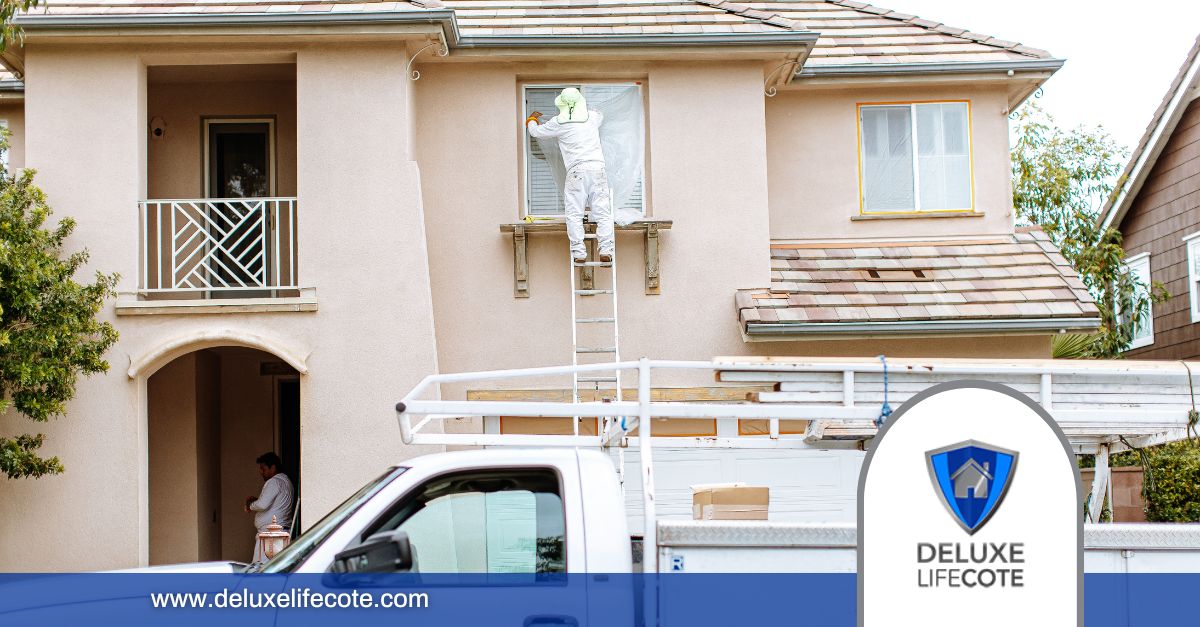
Structural Crack Bridging, SCAQMD Compliance, and Permanent Asset Protection
Thermal efficiency only delivers lasting value if the coating remains intact over decades of seismic shifts, seasonal temperature swings, and coastal moisture cycles. Southern California homes sit atop expansive clay soils and active fault zones that subject rigid stucco exteriors to constant micro-movement.
When conventional paint dries, it becomes brittle; even a fraction of a millimeter of thermal expansion or foundation settling splits the paint film, creating capillary channels that draw rainwater directly into wood framing and lath.
Deluxe Lifecote addresses structural vulnerability through an advanced elastomeric polymer matrix engineered with over 300% elongation capacity. As stucco expands under midday inland heat and contracts during cool coastal nights, the coating flexes seamlessly without fracturing.
At the same time, the membrane maintains controlled vapor permeability—blocking wind-driven rain from entering the wall while allowing naturally occurring interior household humidity to diffuse outward without lifting the coating from the substrate.
Environmental safety and regional regulatory compliance are equally critical across Southern California. Every primer, sealer, and finish coat installed by Deluxe Lifecote adheres strictly to South Coast Air Quality Management District (SCAQMD) Rule 1113 standards for ultra-low Volatile Organic Compounds (VOCs).
Homeowners receive a clean, low-odor installation that safeguards neighborhood air quality while meeting California’s stringent environmental mandates.
Because achieving a permanent bond requires disciplined surface preparation, Deluxe Lifecote executes a multi-stage installation protocol rather than a rapid cosmetic spray-over:
- Deep Hydro-Wash & Contaminant Removal: High-pressure washing strips away oxidized chalk, coastal salt crystals, mildew spores, and loose debris so the primer anchors directly to sound substrate.
- Substrate Repair & Elastomeric Patching: Hairline stucco fractures, window perimeter gaps, and damaged wood trim are ground out, sealed with industrial-grade elastomeric compounds, and textured to match surrounding finishes.
- Bonding Primer Application: A specialized penetrating primer seals porous stucco and masonry, stabilizing the surface and preventing uneven absorption.
- High-Build Infrared-Reflective Topcoat: Technicians apply the thick ceramic-infused coating to uniform mil thickness, encapsulating the home in a seamless thermal and weatherproof shield.
Frequently Asked Questions About Orange County Energy-Efficient Exterior Coating
Does an energy-efficient exterior coating work with dark or HOA-approved colors?
Yes. Unlike conventional paint that relies on bright white pigments to reflect visible light, ceramic infrared-reflective coatings bounce away invisible near-infrared heat waves—meaning dark grays, rich browns, and HOA-approved earth tones achieve high Total Solar Reflectance without overheating your walls.
Over half of all solar heat arrives as invisible near-infrared radiation rather than visible color. Deluxe Lifecote formulates its pigments with specialized ceramic and inorganic compounds that reflect infrared rays across the entire color spectrum. Homeowners bound by strict HOA color palettes in Irvine, Mission Viejo, or Newport Beach can select rich, modern architectural hues while still reducing exterior stucco surface temperatures by 20°F to 40°F.
How much thicker is Deluxe Lifecote compared to standard exterior house paint?
Deluxe Lifecote dries to a film thickness of 20 mils or more—roughly 10 to 20 times thicker than standard acrylic latex house paint, which measures only 1 to 2 mils thick.
Standard house paint consists largely of water and solvents that evaporate during drying, leaving behind a thin, brittle pigment layer vulnerable to UV degradation and salt-air moisture. High-build architectural coatings contain high-solids elastomeric resins and ceramic fillers that cure into a dense, flexible membrane capable of spanning hairline cracks and withstanding decades of coastal weather exposure.
Can a thermal exterior coating prevent stucco cracks from coming back?
While no coating can stop structural foundation shifting, an elastomeric exterior coating with 300%+ elongation stretches dynamically over minor thermal and settling cracks, keeping the surface sealed and waterproof instead of splitting open like rigid paint.
Stucco naturally expands in warm inland afternoon sun and contracts overnight. Rigid acrylic paint snaps along those stress lines within a few seasons, exposing raw stucco to rainwater intrusion. During installation, existing cracks are structurally repaired with flexible elastomeric patching compounds, and the thick topcoat bridges future micro-movement without tearing or flaking.
How long does an energy-efficient exterior coating last in coastal Orange County?
When professionally applied over properly prepared substrates, a high-build elastomeric ceramic coating is engineered as a permanent exterior finish backed by a transferable lifetime warranty against cracking, chipping, flaking, and peeling.
In salt-heavy coastal cities like Huntington Beach, Laguna Beach, and San Clemente, conventional paint typically fails within three to five years due to salt-fog moisture penetration and intense UV exposure. Because Deluxe Lifecote seals out salt aerosols and resists UV binder breakdown, homeowners eliminate the recurring cost and disruption of repainting every few years.
Is the coating safe and compliant with California air quality regulations?
Yes. All Deluxe Lifecote primers and architectural coatings meet or exceed strict South Coast Air Quality Management District (SCAQMD) ultra-low VOC requirements for residential applications.