

What Is the Difference Between Standard House Paint and Deluxe Lifecote Exterior Coating Paint?
Traditional exterior house paint is a cosmetic, water-based liquid containing 65% to 70% water and volatile solvents. When dry, it leaves behind an ultra-thin film measuring only 1.5 to 2 mils thick that rapidly degrades under solar radiation. An engineered architectural exterior coating paint is a high-solids elastomeric wall system applied at up to 20 times the thickness of standard paint (20 to 40 dry mils). Formulated with cross-linking elastomeric polymers and infrared-reflective mineral pigments, high-performance exterior wall systems flex up to 300% to bridge dynamic hairline cracks, reflect thermal radiation away from the structure, waterproof porous masonry and stucco, and eliminate cyclical repainting cycles permanently.
Selecting the right exterior finish for a residential property requires looking beyond color palettes and low upfront contractor bids. Across Southern California, from the salt-laden coastal marine layer of Del Mar, Carlsbad, and La Jolla to the scorching, arid diurnal heat shifts of El Cajon, Escondido, and Riverside, exterior cladding experiences relentless atmospheric punishment.
Standard acrylic latex house paint is engineered as a short-term, sacrificial decorative layer. Exposed to intense ultraviolet (UV) radiation, marine air, and regional seismic micro-movements, standard paint oxidizes, chalks, and cracks within three to five years.
For permanent structural preservation, property owners must understand the mechanical, chemical, and thermal properties that separate temporary house paints from high-build architectural elastomeric wall systems.
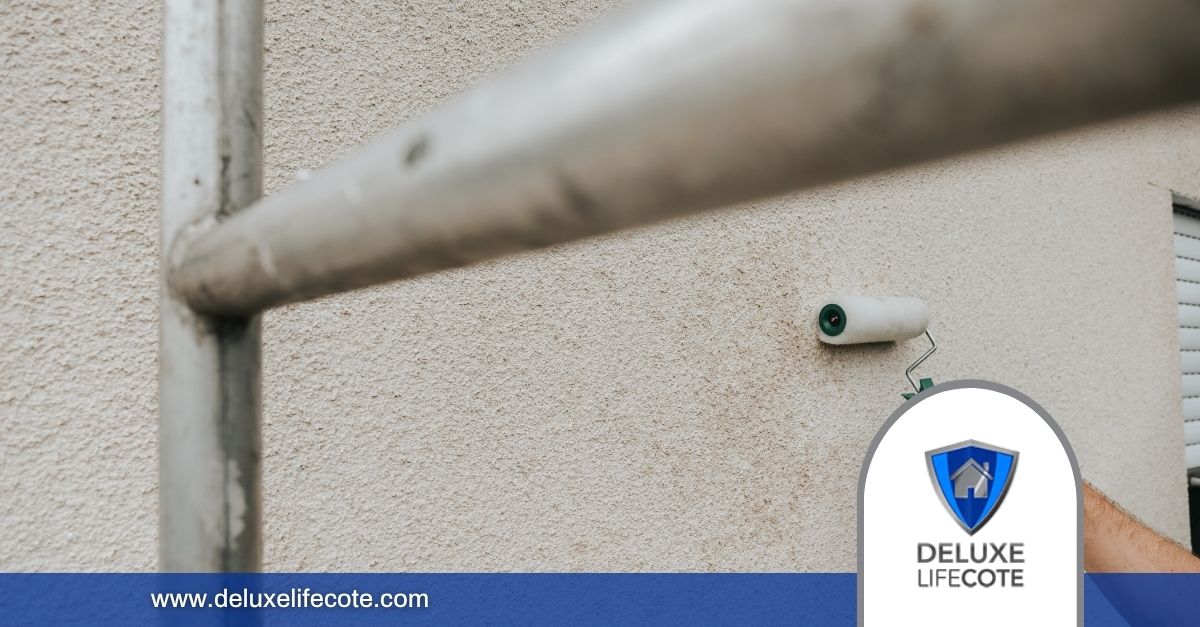
1. Material Mechanics: Elastomeric High-Build Coatings vs. Standard Acrylic Paint
The functional performance of an exterior wall treatment is determined by its volume solids percentage, binder quality, and resulting dry film thickness (DFT).
The Evaporation Problem of Conventional Paint
Ordinary residential house paint consists of 30% to 35% solid pigments and binders suspended in 65% to 70% water and chemical solvents. During the curing cycle, that liquid carrier evaporates entirely into the atmosphere.
The remaining microscopic barrier—measuring a meager 1.5 to 2 mils per coat (roughly the thickness of a single piece of office paper)—lacks the physical density required to seal porous cementitious materials or absorb physical and environmental impacts.
Within 36 to 48 months of direct sun exposure, solar radiation degrades the low-grade vinyl or light-acrylic binders in standard paint. This breakdown triggers photodegradation, leaving paint chalky, brittle, and incapable of preventing moisture intrusion.
The Engineered Chemistry of High-Solids Architectural Systems
By contrast, advanced architectural coatings are formulated with an engineered high-solids resin matrix. Deluxe Lifecote’s high-performance architectural systems feature dense, premium acrylic polymers and complex mineral solids that do not evaporate away.
- 20x Dry Film Build: Cures to a seamless, high-density weatherproofing membrane spanning 20 to 40 dry mils.
- Zero-Peel Nano-Bonding Adhesion: Advanced cross-linking polymers fuse directly into the pores of cementitious substrates, preventing water from wicking behind the cured film.
- Substrate Encapsulation: Creates an impenetrable weather barrier that shields the underlying building envelope from corrosive coastal salts, marine moisture, and wind-driven alkali dust.
Deluxe Lifecote Exterior Coating Paint Vs. Standard Exterior Acrylic Paint Comparison
| Technical Specification | Standard Exterior Acrylic Paint | Commercial-Grade Elastomeric Coating System |
|---|---|---|
| Solids by Volume | 30% – 38%[cite: 23] | 55% – 70%+[cite: 23] |
| Typical Dry Film Thickness (DFT) | 1.5 – 3.5 mils (2 coats)[cite: 23] | 20.0 – 40.0 mils (Multi-pass system)[cite: 23] |
| Tensile Elongation Capacity | 20% – 50% (Brittle failure under stress)[cite: 23] | 300% – 600% (Elastic recovery memory)[cite: 23] |
| Crack Bridging Capability | Non-bridging; fractures instantly[cite: 23] | Bridges hairline cracks up to 1/16″ dynamic[cite: 23] |
| Solar Reflectance / Cool Wall | Minimal; heat absorbs into envelope[cite: 23] | High infrared reflectance (Lowers wall temp up to 37°F)[cite: 23] |
| Permeability (Breathability) | Low to moderate breathability[cite: 23] | Breathable membrane (Passes internal vapor; blocks bulk water)[cite: 23] |
| Repaint Lifecycle | Every 5 to 7 years[cite: 23] | Permanent installation / Transferable Lifetime Warranty[cite: 23] |
2. Dynamic Crack Bridging and Substrate Movement Across Southern California Climates
Southern California structures face continuous thermal expansion and contraction cycles. Known as diurnal movement, building envelopes expand significantly under intense 95°F afternoon heat and contract rapidly as temperatures plummet into the 50s once coastal fog or desert drafts settle in.
Preserving Stucco and Cementitious Plaster
Stucco (Portland cement plaster) is the dominant exterior cladding throughout Southern California architecture. While durable in compression, stucco is naturally brittle, rigid, and hydro-absorbent. As structural foundations settle and framing lumber undergoes thermal expansion, microscopic stress fissures (hairline cracks) radiate through window corners, control joints, and flat expanses.
When standard paint spans these fractures, its rigid, low-elongation film snaps immediately. Rain, irrigation overspray, and humid marine layers then seep into the crack through capillary action. This water rusts internal steel reinforcing wire lath, triggering structural spalling, internal timber dry rot, and unsightly mineral efflorescence stains.
Homeowners can break this degradation cycle by using a permanent protective exterior coating designed to seal porous masonry surfaces permanently. A commercial-grade elastomeric formula possesses an elongation memory rating between 300% and 600%.
As cracks widen during cold snaps and compress during heat waves, the elastic membrane stretches, dynamic and intact, maintaining a hermetic, waterproof seal across the building envelope.
Multi-Material Substrate Interfaces
Modern residential architecture rarely features a single cladding material. A single home often combines:
- Portland cement stucco facades
- Natural cedar or redwood rafter tails and fascia
- Engineered composite or fiber-cement horizontal lap siding
- Architectural expanded polystyrene (EPS) foam moldings
- Metal flashing, gutter assemblies, and downspouts
Each of these building materials maintains a radically different coefficient of thermal expansion. Where wood meets stucco, or where metal flashing butts against architectural foam, heavy shear stresses develop. Standard paint beads tear apart along these material joints. Deluxe Lifecote’s elastomeric chemistry bonds across these dissimilar materials, creating a cohesive, monolithic seal that prevents seam separation, perimeter leaks, and wood rot.
3. Cool Wall Technology: Combatting SDG&E Peak Rates with Infrared Pigments
Solar radiation hits an exterior wall in three distinct bands: ultraviolet light, visible light, and invisible infrared radiation (IR). Infrared energy accounts for roughly 50% of all solar energy absorbed by residential walls, transforming vertical surfaces into massive thermal radiators that bake interior living spaces.
In microclimates like the San Fernando Valley, the Inland Empire, and inland San Diego County (such as Poway, Santee, and Temecula), summer ambient temperatures regularly surpass triple digits. Dark-colored, traditionally painted walls routinely register surface temperatures between 150°F and 170°F.
This conductive heat travels directly through exterior framing, degrades fiberglass wall insulation, and forces air conditioning units into non-stop operation during costly San Diego Gas & Electric (SDG&E) and Southern California Edison (SCE) On-Peak time-of-use rate periods.
The Physics of Complex Inorganic Color Pigments
Conventional house paint relies on cheap organic color dyes. These chemical dyes absorb infrared light waves and convert them directly into conductive heat. Concurrently, solar radiation chemically severs the bonds of organic pigments, causing uneven blotching, chalking, and severe color fade on south- and west-facing elevations.
Deluxe Lifecote integrates advanced cool wall technology formulated with complex inorganic reflective pigments. These specialized, mineral-derived crystal compounds reflect infrared wavelengths back into the atmosphere without absorbing the associated thermal energy.
- Up to 37°F Surface Temperature Drop: Significantly cools exterior wall faces compared to traditional paint formulations in identical color schemes.
- Reduced Interior Heat Gain: Lowers heat transfer into interior wall assemblies, stabilizing ambient room temperatures in second-story bedrooms and west-facing rooms.
- HVAC Stress Reduction: Decreases cooling demand cycles, extending the operational lifespan of residential HVAC equipment.
- Title 24 Alignment: Directly supports California Title 24 Building Energy Efficiency Standards, mitigating neighborhood urban heat island effects.
4. The Economics: Capital Investment vs. The Endless Repainting Cycle
The primary mistake property owners make when evaluating exterior coatings is calculating paint costs as a one-time transaction rather than an escalating operational liability. Standard house paint guarantees repeat maintenance cycles every five to seven years.
Recurring paint contracts compound rapidly due to inflation, environmental disposal fees, regional labor shortages, and scaffolding equipment rentals. Even worse, each repetitive paint cycle requires aggressive mechanical wire-brushing, surface scraping, and chemical stripping that progressively wears down delicate architectural stucco textures, historic masonry, and wood details.
Homeowners can break free from recurring contractor expenses by choosing a permanent exterior wall system that protects their investment for a lifetime. Deluxe Lifecote’s commercial-grade system eliminates this cycle entirely by providing a single, permanent installation supported by an ironclad, transferable lifetime warranty against chipping, flaking, peeling, and moisture intrusion.
5. Architectural Surface Preparation and Precision Multi-Stage Application
An architectural wall coating performs only as well as the substrate preparation underneath it. Applying even the most advanced elastomeric compound over chalked paint, organic mildew, or unstable stucco guarantees early adhesion failure.
Professional coating technicians utilize a rigorous multi-step preparation and application workflow designed to create a molecular bond with the building substrate.
Phase 1: High-Pressure Decontamination and Bio-Washing
Surfaces undergo an industrial hydro-wash using commercial-grade pressure equipment. This process flushes away decades of airborne traffic soot, salt crusts, oxidized chalking paint, and environmental contaminants. Shaded exterior elevations—frequently plagued by mildew, mold, and green algae growth—receive an application of targeted eco-friendly biocides to destroy root fungal structures deep inside porous surfaces.
Phase 2: Mechanical Scarification
Technicians systematically inspect all vertical surfaces, eaves, and architectural trim. Loose, cracked, or flaking legacy coatings are mechanically scraped, wire-brushed, or ground down to sound, uncompromised substrate materials. Feathered transitions are created so prior paint edges disappear beneath the finished architectural membrane.
Phase 3: Structural Crack Stitching and Stucco Restoration
Active cracks and micro-fissures are ground out using masonry blades to relieve trapped stresses, blown clean with compressed air, and packed with high-solids elastomeric stitching compounds. Spalling stucco, broken window pop-outs, and deteriorated architectural foam profiles are professionally patched, leveled, and hand-troweled with textured cementitious compounds to perfectly blend with the existing finish.
Phase 4: Electronic Diagnostic Moisture Verification
Applying a high-solids coating system over a damp substrate traps water within wall cavities, leading to vapor pressure blistering, wood decay, and internal mold colonies. Factory-certified technicians deploy calibrated pinless and pin-type electronic moisture meters across all elevations, confirming wall moisture levels sit safely below manufacturer thresholds before applying primers.
Phase 5: Acid-Neutralizing, Deep-Penetrating Bonding Primer
Untreated masonry and fresh stucco patches possess a high alkaline balance that quickly burns through ordinary paint. A specialized, 100% acrylic penetrating masonry primer is applied across the entire home. This deep-penetrating primer achieves three objectives:
- Neutralizes Substrate pH: Blocks alkali burn-through and efflorescence migration.
- Substrate Consolidation: Glues down dusting sands and chalky residues, turning brittle masonry into a solid foundation.
- Mechanical Anchor Profile: Establishes a high-tack surface profile optimized for cross-linking polymer adhesion.
Phase 6: High-Pressure Hydraulic Application of the Architectural Finish
Unlike standard painting contractors who thin materials with water to extend their coverage, Deluxe Lifecote’s high-build elastomeric coating is applied completely unreduced. Technicians utilize heavy-duty hydraulic sprayers equipped with reversible spray tips to apply a uniform, heavy-bodied wet membrane across the home’s vertical planes.
Phase 7: Mechanical Back-Rolling and Margin Detailing
Immediately behind the hydraulic spray pass, technicians mechanically back-roll the wet material. This mechanical force drives the thick elastomeric resins deep into the open pores, fissures, and texture valleys of the stucco or siding. Window surrounds, fascia joints, soffit intersections, and architectural margins are meticulously finished by hand with heavy-bodied trim brushes, guaranteeing crisp architectural edges, clean sightlines, and complete, pinhole-free envelope protection.
Frequently Asked Questions About Deluxe Lifecote Exterior Coating Paint
What should I look for when choosing an exterior coating paint?
Focus on four key technical metrics: dry film thickness (DFT), tensile elongation percentage, solar reflectance capability, and warranty terms. High-performance coatings provide up to 20 times the thickness of standard paint (20 to 40 dry mils), over 300% elastic elongation to bridge cracks without tearing, and infrared-reflective pigments that drop wall surface temperatures by up to 37°F.
Ensure the product includes an unconditional, transferable lifetime warranty against peeling, chipping, and cracking.
How does an exterior coating differ from standard acrylic house paint?
Standard acrylic house paint is a thin, decorative liquid containing roughly 65% water that dries to a fragile 1.5 to 2-mil film. It quickly breaks down under UV light and cracks as building materials expand and contract.
An architectural exterior coating is a high-solids elastomeric wall system engineered with advanced polymers. It cures into a flexible, waterproof membrane measuring 20 to 40 mils thick that stretches over moving cracks, resists salt spray, and never needs cyclical repainting.
Can an elastomeric coating lower my air conditioning costs in Southern California?
Yes. Advanced wall systems utilize cool wall technology with complex inorganic pigments that reflect solar infrared radiation. By reflecting up to 75% of solar heat rather than absorbing it into stucco and framing, exterior wall temperatures drop by up to 37°F.
This reduction in conductive heat transfer stabilizes interior temperatures and significantly eases air conditioning compressor cycles during expensive peak SDG&E and SCE utility hours.
Is an exterior coating suitable for older stucco with extensive hairline cracks?
Yes. High-build elastomeric coatings are specifically engineered to repair and waterproof cracked, aged stucco. Traditional paint snaps when a crack moves even a fraction of a millimeter.
Because elastomeric systems feature high tensile elongation, the cured coating membrane flexes and recovers over dynamic micro-fissures, permanently sealing water entry points and stopping alkali efflorescence and lath rust.
How does professional surface preparation impact coating longevity?
Surface preparation determines up to 90% of a coating’s long-term adhesion success. Without thorough high-pressure hydro-washing, mechanical scraping of loose paint, structural elastomeric crack patching, moisture verification testing, and an alkali-neutralizing primer, even the highest-grade coating will eventually fail. Proper multi-stage preparation ensures the coating achieves a permanent nano-bond with the substrate.
Investing in an engineered architectural wall coating system elevates residential protection far above the temporary fixes offered by traditional house paints. By combining high-solids elastomeric polymer chemistry, dynamic crack-bridging elasticity, infrared-reflective cool wall performance, and meticulous preparation, homeowners can safeguard their structures against regional microclimates permanently.
This advanced approach preserves architectural beauty, enhances energy efficiency, and eliminates exterior paint maintenance once and for all.