

How do you permanently stop repainting stucco?
Homeowners permanently eliminate recurring exterior paint cycles by replacing thin, rigid latex paints with a permanent exterior stucco coating such as Deluxe LifeCote, which is a commercial-grade, high-build elastomeric membrane. Applied at 15 to 30+ mils (up to ten times thicker than standard house paint), it delivers over 350% elongation (tested to ASTM D2370) to bridge structural hairline cracks while maintaining a breathable, vapor-permeable barrier (ASTM E96) that prevents alkali blistering, moisture entrapment, and UV chalking for the life of the home.
Across Southern California, traditional exterior house paint faces an unforgiving gauntlet. Cementitious stucco is the most common architectural cladding of Los Angeles, Orange, Ventura, Riverside, and San Diego counties, prized for its fire resistance and thermal mass. Yet when finished with conventional acrylic or latex paint, that same stucco becomes a recurring maintenance liability.
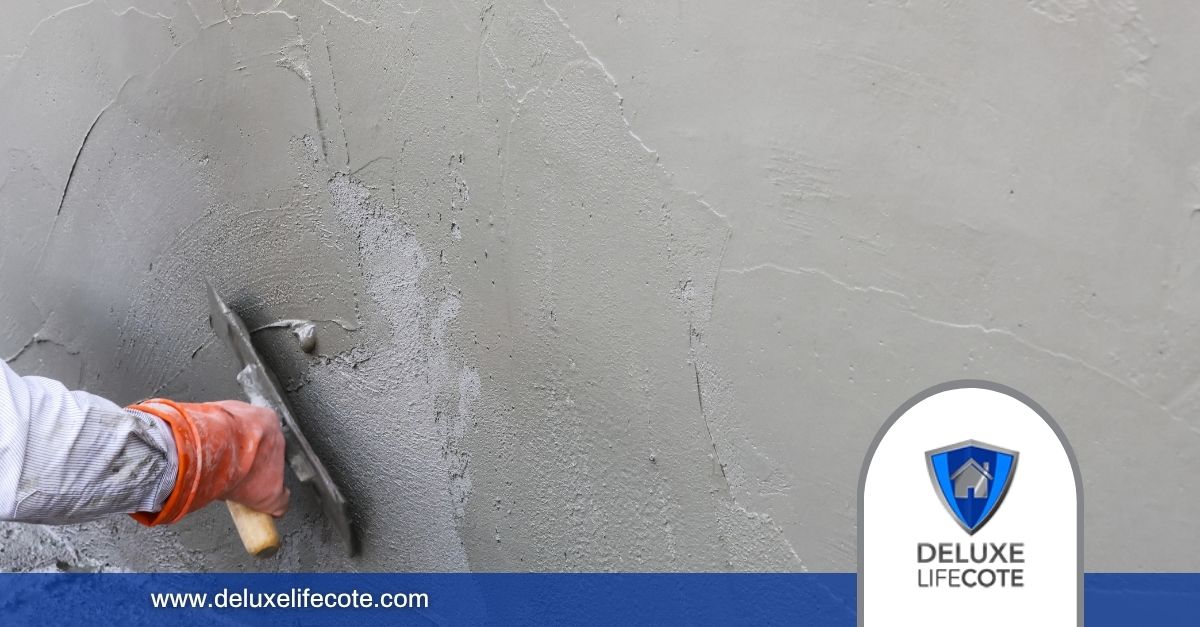
Why Conventional Stucco Paint Cracks, Chalks, and Peels Within 5 to 7 Years
To understand why traditional exterior finishes fail prematurely on Southwestern homes, you have to examine the fundamental incompatibility between standard paint chemistry and stucco.
Conventional exterior latex and acrylic paints are formulated primarily for wood and fiber-cement siding, drying to a razor-thin film of just 1.5 to 3 mils (roughly the thickness of a sheet of copy paper). When sprayed over rough, porous stucco sand-float or lace textures, that thin film stretches unevenly across microscopic peaks and valleys, leaving vulnerable thin spots across every square foot of the exterior envelope.
Thermal Expansion and Microclimate Stress Across Southern California
Stucco is a rigid, masonry-based composite that continuously expands and contracts in response to ambient temperature shifts. In inland microclimates like Woodland Hills, Pasadena, Corona, and Palm Springs, summer afternoon surface temperatures on south- and west-facing stucco walls regularly exceed 130°F before plummeting after sunset.
Standard acrylic paint lacks the tensile elasticity to move with the wall during these daily expansion-contraction cycles.
Over just a few summers, the rigid paint film fatigues and fractures into spiderwebbing hairline cracks.
Once micro-cracks form, winter Pacific storms and wind-driven rain penetrate behind the paint film and saturate the porous stucco base coat.
At the same time, coastal properties along the Pacific Coast Highway from Ventura to Dana Point endure constant salt-air humidity and morning marine fog. Salt crystals migrate into those microscopic fissures, crystallizing beneath the paint layer and prying it away from the masonry surface.
High Surface Alkalinity, Efflorescence, and UV Photo-Oxidation
Cementitious stucco naturally carries a high pH level—often between pH 11 and 13—due to free lime and mineral salts within the cement matrix. When moisture enters a stucco wall, it dissolves these alkaline salts and carries them toward the exterior surface as the wall dries, a process known as efflorescence. Conventional house paints are neither alkali-resistant nor sufficiently vapor-permeable to handle this outward mineral migration. The trapped moisture and alkaline pressure cause the paint to saponify (chemically break down into a soapy residue), bubble, and peel off in sheets.
Simultaneously, year-round California sunlight accelerates photo-oxidation. High-altitude and inland UV exposure breaks down the polymer binders in standard paint, leaving behind a powdery, faded pigment layer known as chalking. Once a stucco exterior begins chalking, fresh coats of paint can no longer achieve mechanical adhesion without extensive chemical stripping or high-pressure blasting.
How a Permanent Exterior Stucco Coating Eliminates Stucco Repainting
Eliminating the five-to-seven-year repainting cycle requires shifting from a thin decorative paint to a high-build, engineered architectural membrane. Rather than sitting atop the stucco as a brittle shell, a permanent exterior stucco coating penetrates deep into the masonry pores and cures into a thick, monolithic protective shield tailored to the structural demands of stucco construction.
Permanent Exterior Stucco Coating Comparison Matrix
| Performance Metric | Conventional Exterior Latex / Acrylic Paint | Standard High-Build Elastomeric Paint | Deluxe LifeCote Permanent Coating |
|---|---|---|---|
| Dry Film Thickness | 1.5 – 3 mils | 8 – 12 mils | 15 – 30+ mils (Up to 10x thicker than paint) |
| Elongation / Flexibility (ASTM D2370) | Low (10% – 30%; splits on movement) | Moderate (150% – 250%) | 350%+ Elongation (Bridges hairline cracks) |
| Vapor Permeability (ASTM E96) | Low to Moderate (Traps moisture) | Often Low (Prone to moisture blisters) | High Breathability (10+ Perms; verify exact spec) |
| Alkali & Efflorescence Resistance | Poor (Saponifies above pH 9) | Moderate (Up to pH 10) | Engineered for high-pH masonry up to pH 13 |
| UV & Heat Reflectivity | Standard pigments fade & chalk rapidly | Moderate UV resistance | Ceramic & titanium-dioxide solar-reflective shield |
| Expected Service Lifespan | 5 – 7 years | 8 – 12 years | Lifetime (Backed by transferable warranty)[cite: 25] |
350%+ Elastomeric Elongation Bridges Structural Movement
Deluxe LifeCote is engineered with specialized elastomeric resins that cure into a dense, flexible rubber-like membrane capable of stretching more than 350% without tearing (measured per ASTM D2370 tensile and elongation standards).
Because the cured coating builds to 15 to 30+ mils—up to ten times thicker than standard house paint—it completely fills the microscopic valleys of rough stucco textures while maintaining uniform film integrity over sharp peaks.
When seismic micro-tremors, soil settling in expansive clay basins, or intense Santa Ana thermal swings cause your stucco walls to shift, the LifeCote membrane flexes seamlessly with the substrate.
Existing hairline fissures remain sealed, and new micro-cracks in the underlying cement coat are bridged invisibly beneath the surface rather than telegraphing through the finish.
Breathable Vapor Permeability Prevents Moisture Blistering
One of the most common failures of ordinary heavy-bodied elastomeric paints is moisture entrapment: they seal the outside so tightly that interior household humidity cannot escape, leading to massive water-filled blisters beneath the coating. Deluxe LifeCote solves this engineering challenge through a microporous, vapor-permeable formulation tested under ASTM E96 water vapor transmission protocols.
The coating acts as a one-way molecular shield. Its dense elastomeric matrix blocks wind-driven liquid rain, sprinklers, and coastal fog from entering the stucco wall from the outside, while microscopic vapor channels allow trapped interior moisture vapor to breathe outward harmlessly.
By keeping the stucco substrate dry and stable, the coating halts efflorescence, prevents mold and mildew colonization, and eliminates the hydrostatic pressure responsible for peeling and flaking.
Solar-Reflective Ceramic Microspheres Cut Cooling Loads
Beyond structural durability, permanent exterior coatings incorporate advanced solar-reflective pigments and hollow ceramic microspheres—aligned with Cool Roof Rating Council (CRRC) and U.S. Department of Energy (DOE) cool-envelope principles—that deflect infrared radiation away from the building envelope.
On sun-baked Southern California elevations, lowering exterior wall surface temperatures significantly slows heat transfer into living spaces, reducing peak summer air-conditioning demand while protecting the coating’s polymers from thermal degradation.
Homeowners looking to evaluate color stability, architectural finishes, and energy savings across different home styles can explore Deluxe LifeCote exterior coating solutions and finish options to see how heat-reflective formulations perform across coastal, valley, and desert microclimates.
Essential Surface Preparation and Priming That Lock In a Lifetime Finish
Even the highest-grade elastomeric polymer system will fail prematurely if applied over oxidized chalk, biological growth, or unsealed structural fractures. A true permanent exterior stucco coating relies on an industrial, multi-stage surface preparation protocol that restores the stucco substrate to a clean, pH-neutral, mechanically sound condition before the final finish membrane is ever sprayed.
- High-Pressure Hydro-Cleaning and Decontamination: Certified technicians begin by thoroughly pressure-washing all exterior stucco elevations to strip away loose paint flakes, oxidized chalk residue, airborne pollution, coastal salt deposits, and fungal spores. Where mildew or algae is present in shaded coastal or canyon exposures, biodegradable antimicrobial washes neutralize organic growth at the root.
- Structural Crack Routing and Elastomeric Patching: All hairline cracks, window-frame perimeter gaps, and control-joint separations are inspected and prepared. Fine fissures are bridged with high-solids elastomeric brush-grade sealants, while wider settlement cracks are routed and filled with textured masonry patching compounds matched to your home’s existing sand-float, skip-trowel, or dash stucco finish so repairs disappear completely.
- Deep-Penetrating Alkali-Resistant Bonding Primer: Once the stucco is clean and dry, technicians apply an industrial, deep-penetrating masonry conditioner and bonding primer. This critical layer soaks into the porous cementitious stucco, binds residual surface dust, neutralizes high surface alkalinity (up to pH 13), and creates a chemical anchor between the masonry wall and the topcoat.
- Precision Masking and High-Build Spray Application: Windows, architectural trim, stonework, rooflines, and landscaping are meticulously masked before the LifeCote finish coat is applied using commercial high-pressure airless spray equipment. Technicians apply a heavy, uniform wet film—often back-rolling into deep stucco textures to ensure 100% pore saturation without bridging or pinholing.
Why It Can Provide a True Lifetime Coating
Because every phase is executed by factory-trained specialists rather than subcontracted day laborers, the cured coating achieves permanent molecular and mechanical adhesion.
For homeowners comparing application standards or evaluating whether their stucco requires structural repair prior to coating, scheduling a professional exterior stucco coating inspection provides a comprehensive moisture, adhesion, and substrate assessment tailored to your property’s microclimate.
In addition, property owners planning exterior upgrades in older neighborhoods should consult the U.S. Environmental Protection Agency (EPA) Lead Renovation, Repair and Painting (RRP) Program guidelines when disturbing pre-1978 painted surfaces during surface preparation.

Frequently Asked Questions About Permanent Exterior Stucco Coating
How long does a permanent exterior stucco coating last compared to traditional paint?
A high-build permanent exterior stucco coating lasts for the lifetime of the home—typically 30+ years without peeling, flaking, or chipping—whereas conventional exterior acrylic or latex paint fails within 5 to 7 years under sun, moisture, and thermal stress.
Because Deluxe LifeCote applies up to ten times thicker than conventional house paint and retains 350%+ elastomeric flexibility, it resists UV photo-oxidation, thermal cracking, and alkali breakdown indefinitely. Instead of budgeting for recurring exterior painting every decade, homeowners make a single permanent investment backed by a transferable lifetime warranty.
How much does a permanent exterior stucco coating cost compared to painting?
While a permanent exterior stucco coating typically costs 1.5x to 2x more upfront than a standard exterior paint job, it eliminates 4 to 5 future repainting cycles—saving Southern California homeowners $25,000 to $50,000+ over 30 years.
Standard exterior stucco painting in Southern California averages $6,000 to $14,000 every 5 to 7 years, with labor and material expenses rising steadily with inflation. Because Deluxe LifeCote is a one-time installation backed by a transferable lifetime warranty against peeling, flaking, and chipping, the system typically pays for itself by the second skipped paint cycle while boosting curb appeal and home resale value.
Can you apply a permanent elastomeric coating over previously painted stucco?
Yes, provided the existing paint undergoes thorough high-pressure washing, removal of all loose or blistering layers, elastomeric crack repair, and priming with a deep-penetrating alkali-resistant masonry bonding primer.
Applying a heavy elastomeric coating directly over chalky or peeling paint will cause the new coating to pull the old paint off the wall. Certified applicators strip away compromised surface layers and use high-penetration primers to lock down sound existing finishes, ensuring the new LifeCote membrane bonds securely to the underlying stucco structure.
Will a thick exterior stucco coating trap moisture inside my walls?
No. Unlike non-breathable rubberized paints that trap water vapor and cause blistering, Deluxe LifeCote is engineered as a vapor-permeable membrane that blocks liquid rainwater while allowing interior moisture vapor to escape freely.
Breathability is essential for cementitious stucco homes. By allowing microscopic water vapor molecules to pass outward through the coating film while repelling wind-driven rain from the exterior, the coating keeps wall cavities dry and prevents efflorescence, dry rot, and moisture-induced peeling.
Does a permanent exterior stucco coating preserve my stucco’s original texture?
Yes. When professionally spray-applied and back-rolled into the masonry profile, a permanent exterior stucco coating preserves the crisp architectural definition of smooth, sand-float, lace, Spanish skip-trowel, and heavy dash stucco textures.
Rather than flattening or obscuring architectural detail like heavy trowel-on acrylics, the high-build liquid membrane conforms evenly to the contours of your existing stucco while filling microscopic pores and hairline cracks for a rich, uniform finish.