

What is elastomeric cool wall coating, and how can it help Orange County homes?
As an Orange County exterior new house paint, Deluxe Lifecote is an elastomeric cool wall coating is an ultra-thick, flexible, exterior masonry membrane engineered with infrared heat-reflective pigments. Unlike traditional acrylic or latex house paints, elastomeric coatings stretch up to 300% to bridge dynamic stucco settlement cracks up to 1/16th of an inch wide while reflecting invisible solar heat. For Orange County homeowners, upgrading to an advanced elastomeric system like Deluxe Lifecote prevents coastal salt-fog intrusion, withstands intense inland UV radiation, complies with California Title 24 energy standards, and lowers exterior wall temperatures by up to 37°F.
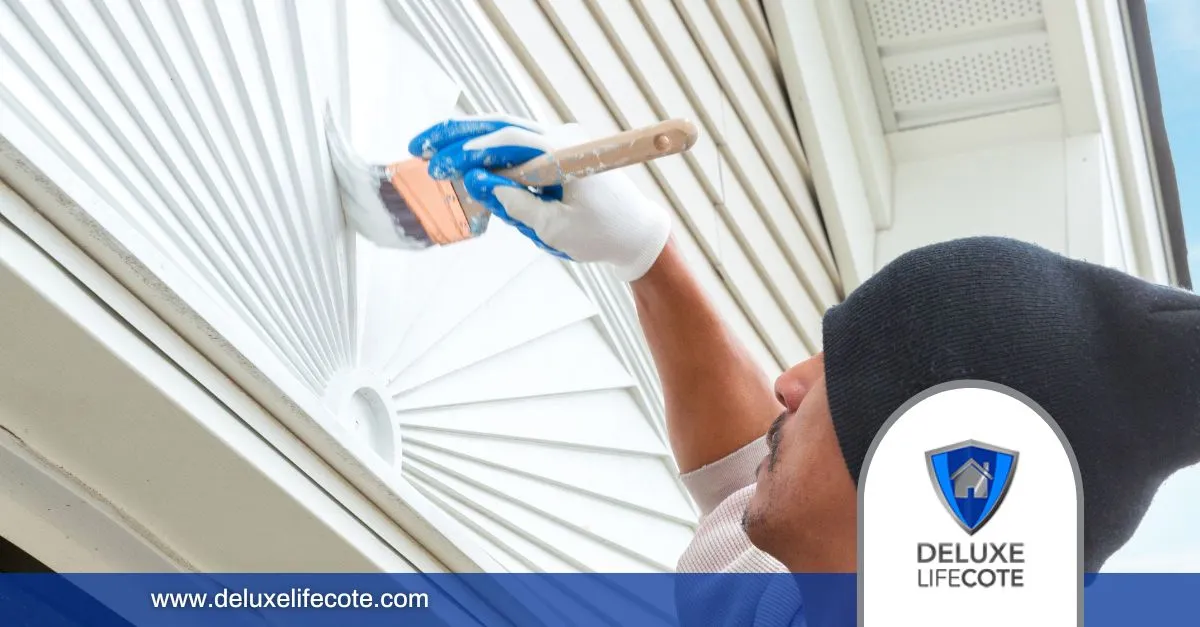
The Environmental Stresses on Orange County Residential Architecture
Newly constructed homes, modern master-planned developments, and recent architectural additions across Southern California are frequently assumed to require minimal exterior maintenance. However, the distinct microclimates spanning the region subject pristine architectural surfaces to severe environmental degradation from day one.
Applying standard builder-grade acrylic paint or off-the-shelf latex coatings to new construction leaves vulnerable stucco, fiber cement, and wood substrates exposed to accelerated oxidation, moisture saturation, and thermal fatigue. Standard paint cures into a thin, brittle film (typically 1 to 2 mils dry film thickness) that cannot adapt to regional environmental stressors or structural settling.
Coastal Microclimates: Salt Spray, Ocean Fog, and Dampness
Properties situated in coastal communities, such as Newport Beach, Laguna Beach, Huntington Beach, and Dana Point, face continuous exposure to heavy marine layers, dense morning ocean fog, high ambient humidity, and airborne ocean salts.
- Salt-Air Saturation & Corrosion: Airborne chloride ions penetrate porous stucco and masonry substrates, corroding internal structural lath and accelerating finish coat delamination.
- Moisture Intrusion & Mold Growth: Persistent ocean dampness leads to surface saturation, creating an ideal breeding ground for mildew, mold, and algae along shaded elevations.
- Efflorescence & Blistering: Trapped water within masonry surfaces dissolves mineral salts, pushing them outward. As the water evaporates through non-breathable paints, it leaves white, powdery deposits (efflorescence) and causes rigid paint films to blister and peel.
Inland Microclimates: Extreme Heat, UV Oxidation, and Thermal Shock
Inland residential communities, including Irvine, Anaheim Hills, Yorba Linda, Rancho Santa Margarita, and Tustin, experience vastly different environmental pressures characterized by soaring summer temperatures, cloudless skies, and intense diurnal temperature shifts.
- UV Degradation & Photo-Oxidation: Unshielded ultraviolet rays break down the chemical binders in conventional paint, causing rapid chalking, color fading, and loss of surface integrity.
- Severe Diurnal Thermal Cycling: Inland surfaces absorb immense thermal energy during peak daylight hours and cool rapidly after sunset. This continuous expansion and contraction causes rigid paint films to fracture and lose adhesion.
- Elevated Conductive Heat Transfer: Unprotected exterior walls absorb up to 90% of incoming solar heat, transferring thermal energy directly into the building interior and forcing HVAC systems to operate continuously.
Structural Settlement, Stucco Curing, and Cracking Dynamics
Newly constructed residential foundations, room additions, and master-planned wall assemblies undergo substantial physical movement during their first three to five years. As fresh concrete foundations settle, framing timber cures and sheds moisture, and newly applied exterior stucco fully hydrates, structural stress concentrates across external wall envelopes.
Standard commercial exterior paints dry into a rigid, non-elastic shell. When underlying stucco develops micro-fissures due to normal structural tension, conventional paint snaps, breaking the moisture barrier and exposing the structure to moisture intrusion.
Deluxe Lifecote solves substrate movement by establishing a thick, rubberized membrane engineered with high-solids elastomeric polymers.
- 300% Elongation Capabilities: Stretches and contracts alongside structural movement, bridging dynamic hairline cracks up to 1/16th of an inch wide without tearing.
- High-Build Film Thickness: Delivers up to 20 times the dry film thickness of traditional liquid house paint (up to 20 mils per coat), forming an impact-resistant armor.
- Deep-Penetrating Nano-Bonding: Uses nano-polymer primers that anchor into the microscopic pores of stucco and masonry, bonding the coating to the substrate to prevent peeling or flaking.
- Permeable Vapor Transmission: Features advanced breathability ratings, allowing internal building vapor to escape while completely blocking liquid water from entering.
Tale of the Tape: Deluxe Lifecote Orange County New House Paint Vs. Other Options
| Exterior Coating Attribute | Standard Builder-Grade Paint | Premium Commercial Acrylic | Deluxe Lifecote Elastomeric |
|---|---|---|---|
| Average Dry Film Thickness | 1.0 – 1.5 mils[cite: 43] | 2.0 – 3.0 mils[cite: 43] | 15.0 – 20.0 mils[cite: 43] |
| Elongation / Flexibility | 0% (Rigid)[cite: 43] | 25% – 50% (Limited)[cite: 43] | 300%+ (Ultra-Flexible)[cite: 43] |
| Hairline Crack Bridging | None (Fails immediately)[cite: 43] | Superficial (< 1/64″)[cite: 43] | Bridges up to 1/16″ dynamic cracks[cite: 43] |
| Solar Reflectivity Rate | 10% – 20%[cite: 43] | 25% – 35%[cite: 43] | Up to 75%+ Infrared Reflection[cite: 43] |
| Expected Service Life | 3 – 5 Years[cite: 43] | 5 – 7 Years[cite: 43] | Lifetime Transferable Protection[cite: 43] |
| Permeability (Breathability) | Low (Traps moisture)[cite: 43] | Moderate[cite: 43] | High (Perm-rated moisture release)[cite: 43] |
Energy Efficiency & California Title 24 Heat-Reflective Mechanics
Dark or non-reflective exterior wall surfaces act as thermal sponges during Southern California summers, absorbing solar energy and raising exterior wall surface temperatures to over 150°F. This direct heat transfers through wall assemblies via conduction, dramatically increasing interior temperatures and forcing central air conditioning systems into non-stop operation.
To combat urban heat islands and reduce grid demand, California’s Title 24 Building Energy Efficiency Standards place strict requirements on building envelopes. Heat-reflective exterior coatings provide an effective pathway to compliance for residential structures.
How Infrared Heat Reflection Works
Deluxe Lifecote integrates specialized ceramic heat-reflective pigments engineered to target the invisible infrared spectrum of sunlight, which accounts for over 50% of total solar heat energy.
- Surface Temperature Reduction: Lowers exterior wall surface temperatures by up to 37°F compared to standard dark or mid-tone acrylic paints.
- HVAC Operational Load Reduction: By limiting heat gain through exterior walls, interior living spaces stay naturally cooler, reducing peak air conditioning electrical consumption and mechanical equipment wear.
- Color and Pigment Preservation: Infrared reflectivity prevents thermal breakdown of underlying color pigments, protecting the home from UV fading, chalking, and discoloration over time.
Comparison: Traditional Repainting vs. Permanent Elastomeric Coating
Homeowners often compare short-term paint application costs against long-term property protection investments. Traditional house painting is an ongoing, recurring operational expense due to regular product breakdown.
How does Deluxe Lifecote prepare exterior walls for elastomeric coating?
Deluxe Lifecote utilizes a 12-step surface preparation process to guarantee mechanical adhesion and long-term performance. This process includes hydro-washing at target pressures to remove salt, chalk, and debris; repairing structural stucco and masonry cracks using elastomeric patching compounds; sealing all window and door perimeters with high-grade caulking; and applying high-build nano-bonding primers engineered to penetrate porous substrates before the elastomeric topcoat is applied.
Structural Prep Work & Surface Engineering
Applying an elastomeric coating over unverified substrates, residual chalk, or unsealed structural cracks causes adhesion failure. Deluxe Lifecote executes a 12-step prep protocol before applying any protective coat.
- High-Pressure Hydro-Washing: Cleans the exterior substrate to eliminate airborne salt deposits, chalking residue, industrial pollutants, dirt, and loose paint particles.
- Substrate Integrity Inspection: Identifies structural cracks, compromised stucco, hidden rot, or dampness requiring physical repair before priming.
- Foundation Trenching: Exposes the bottom edge of the stucco or masonry line below grade to ensure a continuous waterproof seal along the foundation base.
- Scraping & Mechanical Abrasion: Removes any failing legacy coatings to re-establish a solid substrate.
- Masonry Restoration & Texture Matching: Repairs damaged stucco surfaces using specialized patching compounds formulated to match existing architectural textures (e.g., Santa Barbara smooth, heavy dash, lace, sand finish).
- Elastomeric Crack Bridging: Fills dynamic stress fractures and hairline fissures using elastomeric knife-grade compounds that maintain permanent flexibility.
- Perimeter Sealing & Caulking: Applies high-performance elastomeric caulking around all window frames, door surrounds, light fixtures, hose bibs, and structural penetrations.
- Masking & Property Protection: Covers non-coated architectural features—including glass, roofs, hardscapes, decking, landscaping, and metal hardware—with heavy-duty protective films.
- Nano-Bonding Primer Application: Applies a specialized high-build acrylic/elastomeric primer that penetrates deep into porous stucco, fiber cement, or wood to establish a permanent chemical bond.
- First Primary Coat Application: Applies a thick, uniform layer of heat-reflective elastomeric coating using specialized high-pressure airless equipment.
- Cross-Hatch Secondary Coat Application: Applies a second coat in an opposing directional pass to eliminate pinholes, guarantee uniform wet-film thickness, and achieve full target mil thickness.
- Detailed Quality Control Inspection: Performs a comprehensive property review, removes masking materials, cleans up the job site, and completes a final walk-through with the homeowner.
Complete Exterior Envelope Defense
A resilient building envelope requires protective coverage across every secondary architectural component. Fascia boards, eaves, trim packages, architectural pop-outs, metal flashing, and garage doors are highly susceptible to solar exposure, moisture absorption, and thermal warping.
Wood Trim, Eaves, and Fascia Boards
Eaves, rafter tails, and fascia boards bear the brunt of rising roofline heat and trapped moisture under shadow lines.
- Dry Rot & Moisture Defense: Deluxe Lifecote seals porous wood grain against moisture intrusion, stopping dry rot and fungal decay before it impacts structural framing.
- Warping & Splitting Resistance: By locking out water and reflecting UV radiation, wood components maintain dimensional stability, preventing twisting, cupping, and grain splitting.
Architectural Pop-Outs, Trim Packages, and Decorative Elements
Decorative foam or stucco pop-outs around windows and doors frequently exhibit cracking along joint seams due to differential expansion rates between materials.
- Flexible Joint Coverage: High-elongation coatings bridge material transition seams, preventing cracks from opening at structural trim junctions.
- Impact & Scuff Resistance: Formulated to withstand physical impacts, bird activity, and windblown debris.
Metal Gutters, Downspouts, and Flashing
Dissimilar metals and exposed steel flashings undergo rapid oxidation when exposed to coastal salt air and dew.
- Corrosion Inhibition: Metal surfaces receive specialized rust-inhibiting primers before topcoating to halt oxidation and rust streaking.
- Thermal Expansion Compliance: Flexible coatings bond to smooth metal surfaces without cracking or flaking during rapid temperature changes.
Does elastomeric cool wall paint qualify for California Title 24 compliance?
Yes, advanced elastomeric cool wall coating systems like Deluxe Lifecote fully comply with California Title 24 Building Energy Efficiency Standards. By utilizing specialized ceramic pigments that bounce away invisible solar infrared radiation, these coatings lower exterior wall surface temperatures by up to 37°F, reduce conductive heat gain into interior living spaces, and decrease residential cooling energy demands.
Orange County Exterior New House Paint FAQs
What is the difference between standard paint and an elastomeric exterior coating?
Standard paint is a thin, decorative liquid (1–2 mils dry thickness) that cures into a rigid, non-flexible film. Over time, building movement causes standard paint to crack, peel, and fade. An elastomeric exterior coating is a high-solids protective membrane applied up to 20 times thicker than standard paint. It stretches up to 300% to bridge dynamic stucco cracks, provides a waterproof seal, and incorporates heat-reflective pigments to lower energy bills.
How long does an elastomeric cool wall coating last on an Orange County home?
While conventional repainting lasts only 3 to 5 years under Southern California’s coastal fog and inland heat, a professionally applied elastomeric coating like Deluxe Lifecote provides a permanent exterior solution. As an exterior paint backed by a transferable lifetime guarantee, it is engineered to withstand a lifetime of solar exposure, structural settlement, and severe weather without peeling, chipping, or flaking.
Can elastomeric coatings be applied over fresh stucco or newly constructed walls?
Yes, but proper surface preparation and curing protocols are essential. Fresh stucco must undergo a full curing cycle, or be primed with high-build alkali-resistant primers specifically formulated to neutralize high pH levels present in raw masonry. Deluxe Lifecote applies nano-bonding, alkali-resistant primers that fuse directly with new stucco substrates, creating a stable foundation for the elastomeric topcoat.
How does heat-reflective coating lower monthly home cooling bills?
Heat-reflective coatings contain specialized ceramic pigments that reflect infrared light—the primary source of solar heat radiation. By reflecting up to 75% or more of solar rays away from exterior walls, the coating prevents thermal energy from absorbing into the building envelope. This keeps interior living spaces cooler, reduces reliance on air conditioning systems, and lowers monthly summer utility bills.
Will elastomeric paint trap moisture inside my home’s exterior walls?
No. High-quality elastomeric coatings are engineered with high vapor permeability (breathability) ratings. While the coating forms a tight, hydrophobic barrier that prevents external rain, dew, and ocean fog from penetrating inward, it allows internal moisture vapor from inside the home to escape freely, preventing interior moisture buildup, bubbling, or blistering.
Is an elastomeric cool wall coating suitable for both coastal and inland microclimates?
Yes. Elastomeric cool wall coatings are tailored to address both major Southern California microclimates. In coastal areas (e.g., Newport Beach, Huntington Beach), the hydrophobic membrane blocks salt air, ocean fog, and moisture absorption to stop mold and efflorescence. In inland valleys (e.g., Irvine, Anaheim Hills), the coating’s elasticity resists severe UV degradation and thermal cycling while reflecting solar radiation to lower indoor heat gain.